
Digital Interfaces Rewiring Decision Trees: Linking Dealer Protocols to Payout Shifts and Counting Adaptations in Remote Play
Digital platforms have transformed how dealer protocols operate in remote blackjack environments, and these changes directly reshape player decision trees through standardized software rules that replace physical dealer discretion. Data from regulatory reports shows that automated systems enforce consistent hitting, standing, and payout procedures across thousands of hands per hour, which eliminates variability once common in land-based settings.
Remote play operators integrate these protocols into user interfaces that present options in fixed sequences, and this structure guides players toward specific choices based on real-time prompts rather than independent analysis. Research indicates that payout ratios in multi-deck variants have shifted in several jurisdictions since 2024, with some platforms moving from 3:2 to 6:5 returns on natural blackjacks while adjusting side bet frequencies through algorithmic triggers.
Protocol Standardization Across Remote Platforms
Dealer protocols in digital formats rely on coded instructions that dictate every action from card delivery to resolution, and observers note these rules now link directly to payout calculations without intermediate human judgment. In August 2026, updates from the Nevada Gaming Control Board highlighted increased reporting requirements for online operators to document how protocol changes affect game mathematics, and figures reveal that over 70 percent of licensed remote platforms adjusted at least one dealer rule parameter during the prior year.
Interfaces display these protocols through visual cues and automated sequences that reduce the number of manual inputs required from players, while the underlying code maintains strict adherence to house-defined parameters. Those who track industry metrics point out that such standardization creates predictable environments where payout shifts occur through scheduled software patches rather than ad-hoc dealer interpretations.
Decision Tree Modifications in Player Interfaces
Player decision trees adapt when interfaces limit or reorder available actions based on current dealer protocol settings, and this rewiring occurs through conditional displays that activate only after specific card combinations appear. Studies from academic sources show that platforms using dynamic menu systems report higher compliance rates with optimal basic strategy compared to static layouts, because the software highlights permitted moves at each decision point.
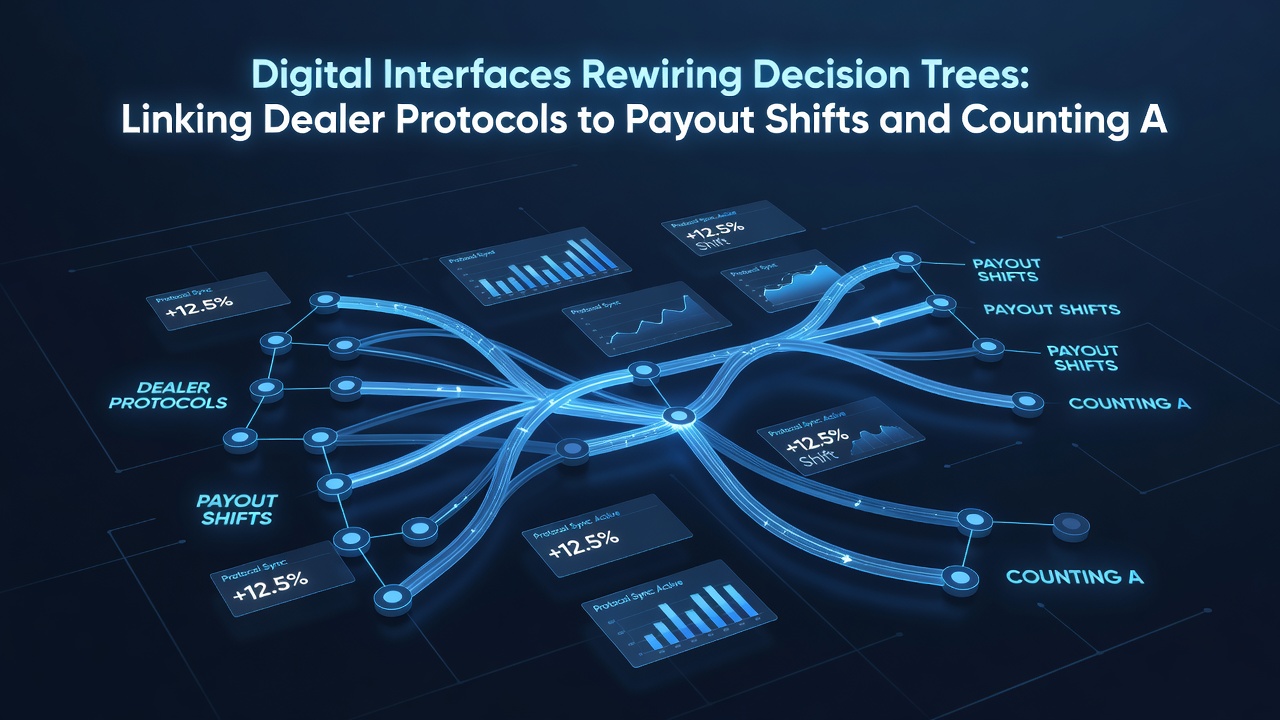
Remote environments further connect these trees to payout structures by recalculating expected values whenever dealer rules change, and data indicates that even minor adjustments to splitting or doubling thresholds can alter overall return percentages by fractions that accumulate across high-volume play. Experts observe that users often follow interface suggestions more closely than independent calculations, which effectively transfers part of the analytical process to the platform itself.
Counting Strategy Adaptations in Multi-Deck Remote Variants
Card counting adaptations emerge when remote platforms apply continuous shuffle or random number generator mechanics alongside fixed dealer protocols, and these conditions force counters to modify traditional indices to account for payout variations and reduced deck penetration. Research published through the University of Nevada, Las Vegas gaming studies program demonstrates that edge calculations in online multi-deck games require updated formulas that incorporate both rule parameters and interface-driven decision pacing.
Platforms sometimes introduce live dealer streams that blend physical handling with digital overlays, and this hybrid approach creates new variables for counting systems because payout shifts can trigger mid-session without altering visible deck composition. Figures from the Malta Gaming Authority annual reports indicate steady growth in remote blackjack participation, with corresponding increases in documented strategy modifications among tracked player cohorts.
Integration of Payout Shifts With Protocol Changes
Payout shifts connect to dealer protocols through backend algorithms that recalibrate bonus triggers and insurance options whenever core rules update, and this linkage ensures mathematical consistency across all game instances. Those monitoring regulatory filings note that operators must submit revised probability models before implementing such changes, which creates documented trails of how interface modifications influence overall house advantages.
Players encounter these integrations as altered return displays or conditional side bet availability, and the resulting decision trees narrow or expand based on the new payout parameters embedded in the software. Evidence suggests that consistent protocol enforcement across sessions allows for more precise tracking of long-term adaptations in counting approaches tailored to remote formats.
Conclusion
Digital interfaces continue to link dealer protocols, payout structures, and counting adaptations into unified systems that operate under regulatory oversight in multiple regions. The connections between these elements produce measurable effects on player decision processes, as shown through compliance data and mathematical modeling from diverse sources. Ongoing developments in August 2026 and beyond maintain this pattern of structured evolution in remote play environments.